The Wendigo Run is a proposed Canadian mega-descent designed to operate at the scale of the world's premier mass-start alpine races. This Operational Concept outlines how the event would function if approved, including safety systems, rider flow, terrain strategy, logistics, and broadcast integration.
This is not an operational plan. It is a conceptual framework intended for cultural partners, government agencies, tourism boards, sponsors, and investors.
Event Identity
The Wendigo Run is envisioned as:
- a mass-start alpine descent
- a high-speed, high-visibility extreme-sports event
- a culturally grounded project
- a broadcast-ready spectacle
- a tourism-driving initiative
Course Concept
The proposed descent includes:
- alpine start zone
- glacier or high-altitude terrain (pending environmental review)
- technical singletrack
- high-speed fire roads
- forested sections
- controlled finish zone
Course design is subject to cultural approval, environmental assessment, safety review, terrain feasibility, and municipal and provincial alignment.



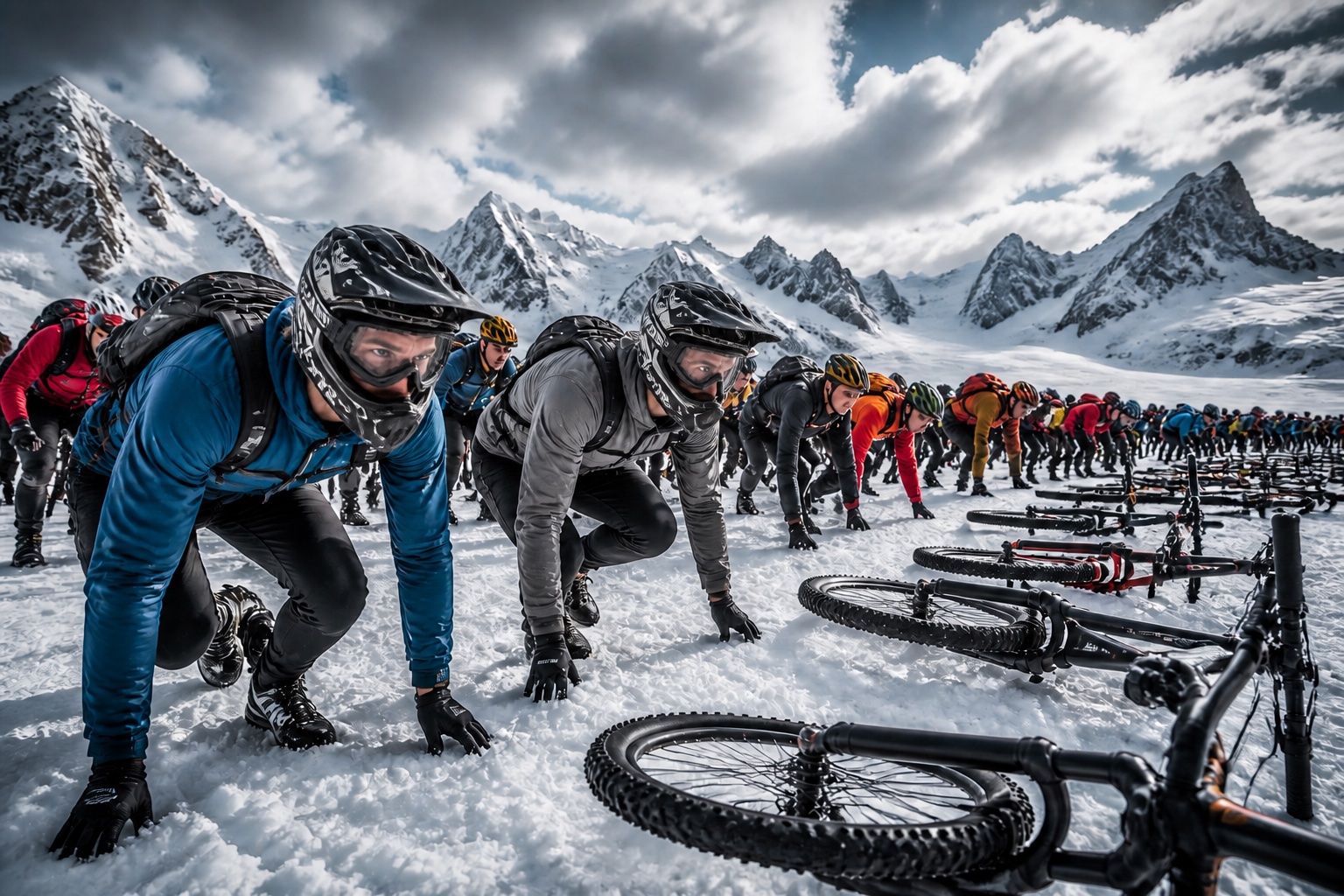
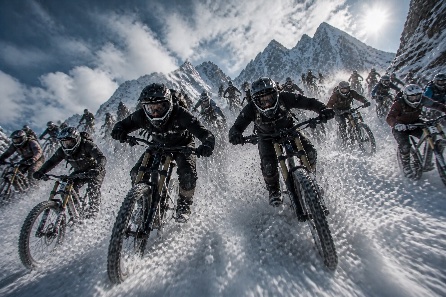
Mass-Start Format
The Wendigo Run uses a mass-start format because it creates:
- cinematic broadcast moments
- rider drama and unpredictability
- strong spectator engagement
- high tourism value
- long-tail digital content
For safety, riders launch in seeded start waves minutes apart — not a single mass launch — with wave placement determined by qualifying runs during event week. Every rider is individually chip-timed: the winner is the fastest elapsed time, not the first across the line.
The inaugural is capped at 3,500 riders — deliberately above Megavalanche's ~2,000, and deliberately bounded: the cap is the safety case made concrete. If entries oversubscribe, qualifying doubles as the selection mechanism. The cap can rise in future editions once course, safety systems, and wave throughput are proven at scale.
Safety Infrastructure
Safety is the largest operational priority — it is also the foundation the insurance, the venue agreement, and the Nations' trust all rest on. The concept includes:
- medical teams stationed along the course
- first-response units at critical points
- evacuation routes mapped in advance
- on-course marshals
- communication towers
- drone and helicopter support (if approved)
- emergency transport systems
- weather-response protocols
Every entrant signs a liability waiver acknowledging that the decision to race is their own, made of their own free will, and holding the organizers blameless for accidents or injuries — to be drafted by qualified BC legal counsel. The waiver is one leg of the protection structure, alongside event liability insurance and the safety systems above. The organizers' commitment is symmetric: the track is made as safe as it can be made, and every commitment to the racers is fulfilled.
Seeded start waves — rather than a single mass launch — are expected to be a condition of event liability coverage at this scale, and are adopted as such.
Rider Flow and Course Management
Rider flow is managed through:
- staggered holding zones
- controlled release procedures
- mandatory safety briefings
- pre-ride terrain familiarization
- course marshals at all technical sections
- rider-tracking systems (RFID or GPS)
Logistics and Infrastructure
Operational logistics include:
- staging areas
- fencing and barriers
- signage systems
- communication towers
- rider-flow corridors
- spectator zones (if approved)
- transportation and shuttle systems
- finish-zone infrastructure
Finish Zone
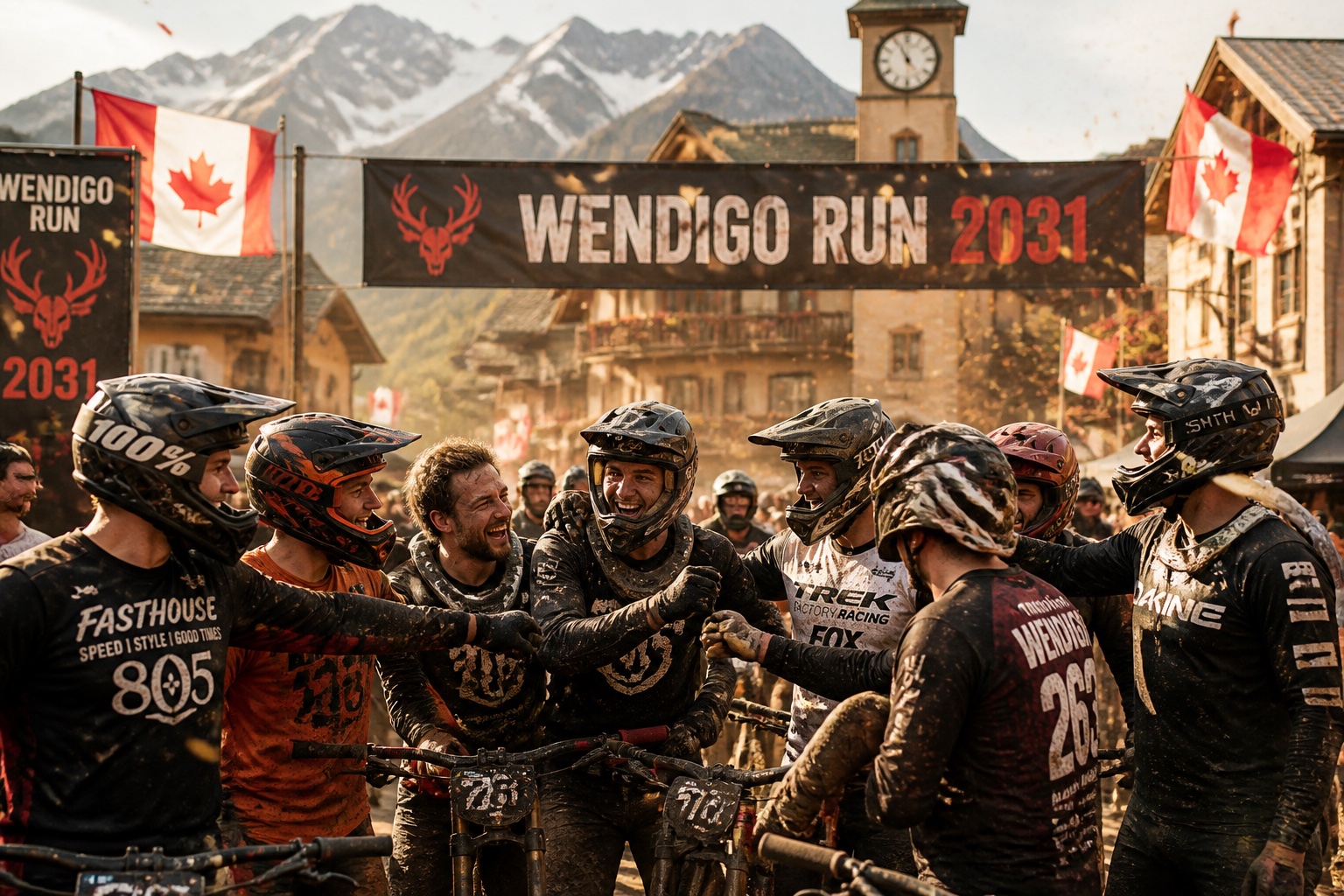
The finish zone is designed as a broadcast and spectator focal point: controlled rider deceleration, immediate medical presence, live timing displays, and a festival atmosphere for the host community.
Environmental Stewardship
Environmental considerations include:
- erosion-control planning
- terrain reinforcement (if approved)
- wildlife impact review
- seasonal timing analysis
- sustainable course design
- low-impact infrastructure
Cultural Partnership Integration
Operational planning includes:
- cultural consultation
- protocol guidance
- Indigenous leadership in the opening ceremony
- cultural programming (if approved)
- terrain considerations informed by cultural knowledge
Event Staff Identity
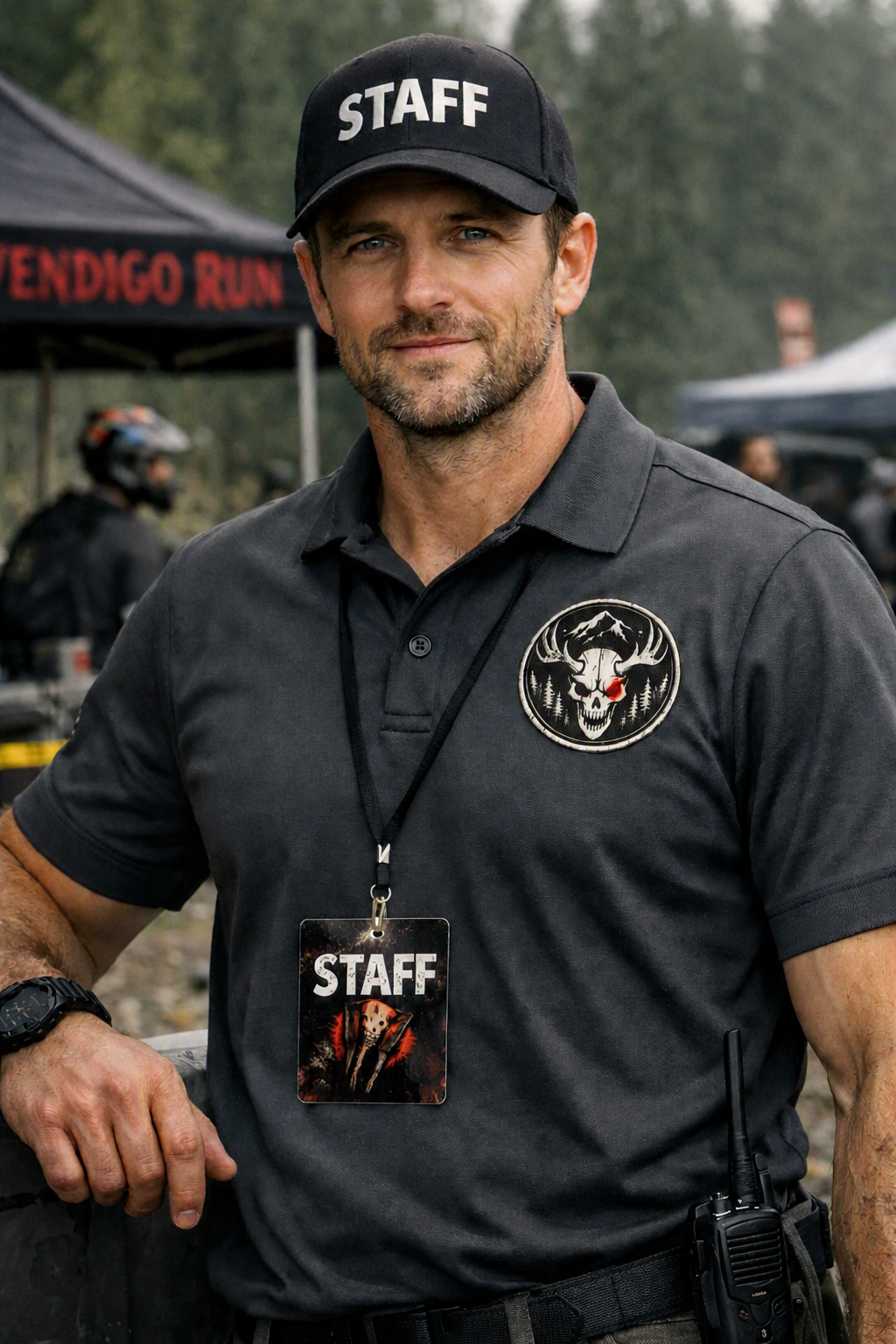
Professional staff uniforms are designed for high-visibility, brand consistency, and operational clarity across all event zones.
Broadcast and Media Operations
Broadcast operations include:
- drone teams
- camera operators
- on-course filming units
- editing crews
- broadcast overlays
- highlight-reel production
- media distribution
- rider-profile storytelling
Operational Timeline
Year 1 (2027): Concept Development
Cultural consultation with Squamish Nation and Lil'wat Nation, terrain review, brand expansion, racer rules summit, $400K seed tranche.
Year 2 (2028): Safety Planning & Logistics
Safety systems design, logistics mapping, trail engineering, sponsor alignment, broadcast planning, operator procurement, $900K seed tranche.
Year 3 (2029): Build & Qualifying
Rider recruitment, qualifying system rollout, international promotion, full operational modeling. Revenue covers costs — operating break-even.
Year 4 (2030): Test Event
Full-scale seeding qualifier run under race conditions — course, safety, broadcast, and operations proven a year before the inaugural. Cumulative profitability.
Year 5 (2031): Inaugural
The inaugural Wendigo Run, late June 2031 — seeded start waves, every rider chip-timed, fastest elapsed time wins. Equal men's and women's divisions, equal prize money, same course, same rules.
Prize Purse
The confirmed purse is $384,000 — $192,000 per division, distributed $100,000 / $50,000 / $25,000 with $1,000 each for the next seventeen finishers in each division. Structured to be among the richest purses ever proposed for an event of this type, it is the financial statement of the event's ambition — and of its commitment to equality between the divisions.